
It's ten past eight. You're wrapped in a blanket, your head is somewhere else entirely, and the one thing standing between you and going back to sleep is a message from work: "Can you send in a cert?" Getting a sick cert online in Ireland exists for exactly this morning — the one where you're genuinely unwell and the last thing you need is a waiting room.
The quick answer: you can request a sick cert online from an IMC-registered doctor, without a full consultation, for €30. A doctor reviews your request individually, and if they're satisfied it's clinically appropriate, your cert is issued and delivered digitally, typically the same day. It is never automatic: a doctor decides, every time.
If that's all you needed, close this tab and go back to bed. That's what the cert is for.
Still here? Then let's sort out the details: what a cert actually is, when you need one, what it costs, and the one question nobody else seems willing to answer: when a doctor will say no.
One thing before any of that: a sick cert is paperwork. If you feel seriously unwell (chest pain, trouble breathing, confusion, anything that frightens you), this is not a paperwork morning. Call 999 or 112 or go to your nearest emergency department.
What a sick cert is (and the three names it goes by)
A sick cert, a sick note, a medical certificate — in Ireland these are the same document wearing three outfits. It's a formal statement from a registered doctor that you are unfit for work (or college) due to illness or injury, covering specific dates.
What it is not: a diagnosis broadcast. The cert confirms you were assessed and are unfit to work. The details of what's wrong with you stay between you and the doctor.
You'll also hear about fit-to-work certs: the same conversation from the other direction, confirming you're well enough to come back. Same process, same doctor, same document type.
When you actually need one
Three situations account for nearly every cert request in Ireland.
For your employer
When you need a cert for work is set by your employment contract or company sick-leave policy. Some employers want one from day one, others only after two or three days out. There's no single national rule here: the policy that matters is the one in your contract, so that's the document to check before you assume anything.
For statutory sick pay
Ireland's statutory sick pay scheme is where certs stop being optional. Under the scheme, you're entitled to be paid 70% of your usual daily earnings, up to €110 a day, for a set number of sick days per year — five paid days, per the Workplace Relations Commission's current guidance. Two conditions matter:
You need 13 weeks of continuous service with your employer to qualify.
The leave must be medically certified — statutory sick pay applies to certified leave only, and the cert must come from a registered medical practitioner.
That last line is the reason "can I get a cert for just one day?" is such a common question. If you want the statutory payment, the answer to "do I need a cert?" is yes — from the first day. Unused statutory sick days expire at the end of the calendar year, and the exact entitlement can change from year to year, so the WRC's sick-leave page is worth checking for the current figures.
For Illness Benefit
If you're out longer, Illness Benefit is a separate social-welfare payment with its own rules and its own certification process: your doctor completes a specific form rather than a standard work cert. The details live on gov.ie; the thing to know here is that it's a different track, and a standard sick cert on its own doesn't start it.
For college
Universities and colleges accept medical certs for missed exams and deadlines, usually with their own submission rules and time limits. Check your institution's policy — the deadlines are often tighter than you'd expect.
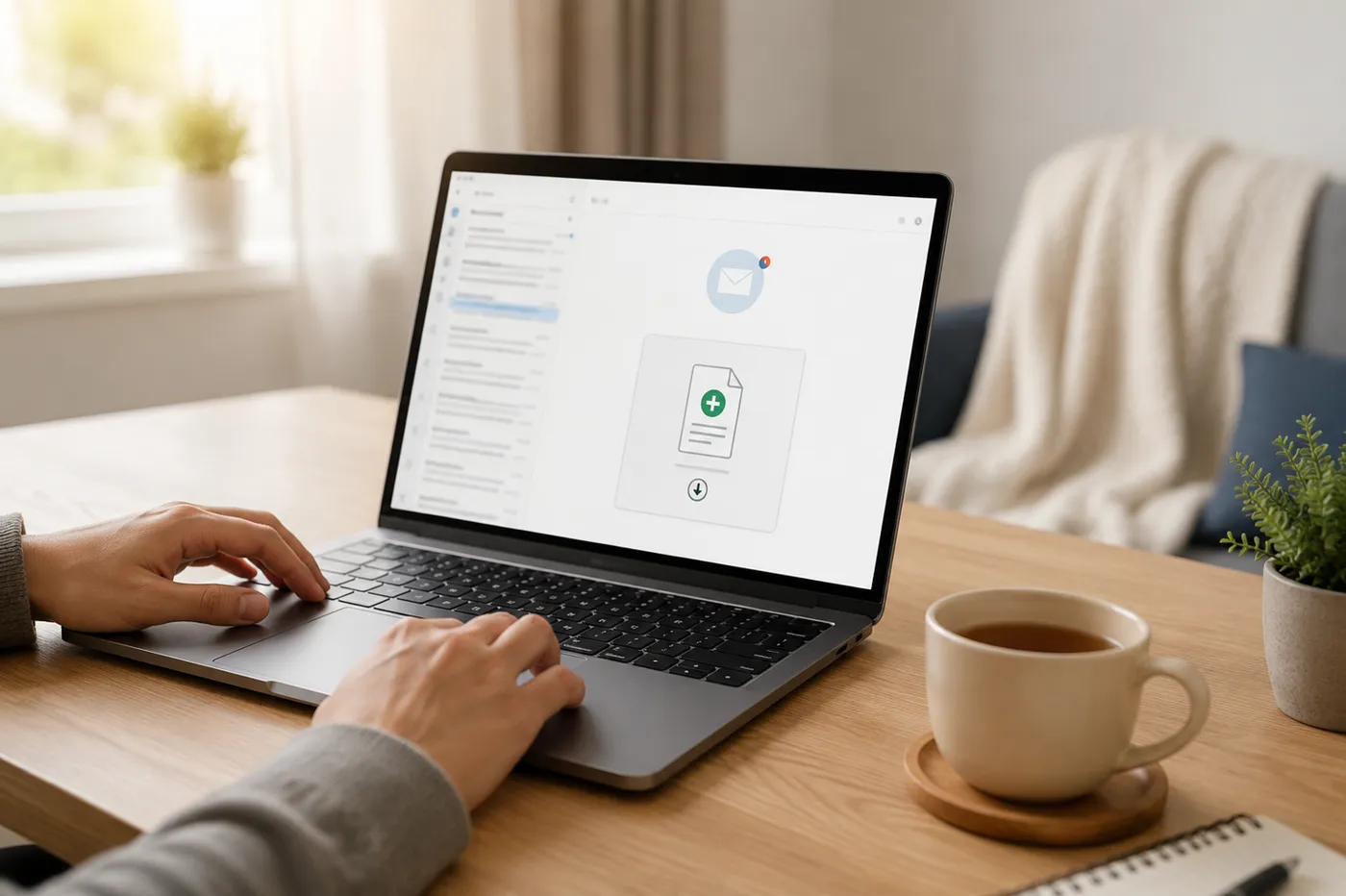
How getting one online works
The process is built for people who feel awful and want this handled with the minimum number of steps.
Choose "Certificates Only" and pay online. It costs €30 — no full consultation required, which is most of why it's faster and cheaper than booking a standard appointment.
Answer the health questions. You describe your illness, the dates involved, and what the cert is for — work, college, or fit-to-work. This is the information the doctor reviews, so plain honesty beats performance here.
A doctor reviews your request. Every request is assessed individually by an IMC-registered doctor. If anything needs clarifying, they may contact you on the number you provide, so keep the phone nearby.
Your cert arrives digitally. Once the doctor approves it, the cert is issued and delivered digitally, typically the same day. No printer, no queue, no second trip anywhere.
The service runs 7 days a week, which matters mostly because illness has never once respected a Monday-to-Friday schedule.
What it costs — and what you're paying for
A cert-only request is €30. What that buys is not a rubber stamp; it's a registered doctor's time to review your request properly and put their professional name on a formal document. That's also why it's cheaper than a full consultation: you're paying for a focused review of a cert request, not a complete appointment about your health. If what you actually need is medical advice, the "should I be worried about this?" conversation, then book a consultation instead; that's what the phone and video appointments are for.
In-person GP fees vary from practice to practice, so we won't quote other people's prices here. The honest comparison isn't only money anyway. It's a bus journey and a waiting room versus your own sofa, on a day when the sofa is medically the better idea.
Online or your own GP?
Both routes end in the same document: a cert from a registered doctor. The honest way to choose between them:
Your own GP is the right call when the illness is part of an ongoing story they already know, when you'd benefit from an examination anyway, or when the cert is one piece of a bigger visit. Continuity of care is a real thing, and no online service should pretend otherwise.
Online is the right call when the situation is straightforward, today, and the practical problem is access: no GP taking new patients, no appointment until Thursday, or no realistic way to sit in a waiting room feeling the way you feel. A cert-only request exists precisely for the days when the paperwork is the whole errand.
If you start online and the doctor decides your case needs in-person care, they'll say so and point you to the right place. That's the system working, not failing.
Will you definitely get one? Here's when the answer is no
This is the part most guides skip, so let's not skip it.
No doctor-issued cert is ever guaranteed. Not here, not anywhere reputable. A cert is a doctor's professional judgment that you're unfit for work, and if the doctor isn't satisfied of that, they won't issue one. Booking a cert request is paying for the review, not buying the outcome. That's precisely what makes the cert worth something to your employer.
Expect a no, or a redirect, when:
Your situation needs an in-person examination. Some things simply can't be assessed remotely, and a responsible doctor will say so rather than guess.
The request reaches too far back. Backdating is a matter of the doctor's judgment about what they can honestly certify. A cert covering days they can't reasonably stand over isn't one they'll sign.
The request doesn't add up. Certs exist to document genuine illness. Requests that look like they're for something else get declined.
If online isn't the right route for your case, the right door is usually your own GP, and knowing that before you pay beats finding out after. Telemedicine is genuinely good at the routine middle of healthcare; the edges belong to in-person care, and we'd rather tell you that in paragraph form now than in a refund email later.
Can you get a cert for just one day?
Yes. One-day certs are real, common, and sometimes required. If your employer's policy asks for certification from day one, or you want a statutory sick pay day counted, a single-day cert is exactly the document for it. The same rule applies as always: the doctor decides whether they can certify it. A same-day request for today's illness is a far easier judgment than a request next Tuesday about last Wednesday.
How fast does it arrive?
Requests are reviewed by a doctor and, once approved, the cert is delivered digitally, typically the same day. If the doctor needs to clarify something, that phone call is the only thing that adds time, which is a good reason to answer the health questions properly the first time and keep your phone within reach.
What's actually on the cert
Less than people fear. A sick cert states the essentials an employer or college needs: your name, the relevant dates, and a registered doctor's confirmation that you were assessed and are unfit for work (or fit to return, for a fit-to-work cert), with the doctor's details attached.
What it doesn't need to do is narrate your medical history. The purpose of a cert is to confirm your absence is medically legitimate, not to tell your employer what's wrong with you; the clinical detail stays between you and the doctor. If whoever's asking for the cert wants more than it says, that's a conversation about their policy, not a gap in your paperwork.
Frequently asked questions
Can I get a sick note without seeing a doctor in Ireland? Without a full appointment, yes: that's what a cert-only request is. Without a doctor altogether, no. A cert is a doctor's document; every request is reviewed by an IMC-registered doctor even when there's no consultation call.
Can I write my own sick note? No. For statutory sick pay the certificate must come from a registered medical practitioner, and an employer is under no obligation to accept anything self-produced. A homemade note isn't a shortcut; it's a problem.
How much does a sick cert cost in Ireland? €30 for a cert-only request here. Prices elsewhere vary, as does what they include, so compare the process, not just the number.
How many paid sick days are you allowed in Ireland? Statutory sick pay currently covers five paid days per calendar year at 70% of your usual daily earnings, capped at €110 a day, once you have 13 weeks' service, per the Workplace Relations Commission. Your contract may be more generous; it can't be less.
What are valid reasons for a sick cert? Any illness or injury that genuinely makes you unfit for work. That's the whole test, and the doctor applies it. There's no approved list of impressive-sounding conditions, and you don't need one.
Will my employer accept an online cert? Certs issued this way come from IMC-registered doctors, the same as any GP's cert. Whether a given employer has extra requirements is their policy; if yours is unusually particular, the cert-versus-policy conversation is one to have with HR, ideally before the deadline.
Written by the HealthDoc team. Every certificate request through HealthDoc is individually reviewed by an IMC-registered doctor; this article is general information about how sick certs work in Ireland, not medical advice.
Feeling rough and need the paperwork handled? Request a certificate online — €30, reviewed by a registered doctor, delivered digitally, 7 days a week. The kettle-to-cert time is shorter than most hold music.